|
|
|
|
|
STANDARD OPERATING PROCEDURES FOR THE CONTROL AND SUPPRESSION OF
MOSQUITOES IN CENTRAL MASSACHUSETTS - A GUIDE .pdf format (1.21 MB) updated January 2008 ¨
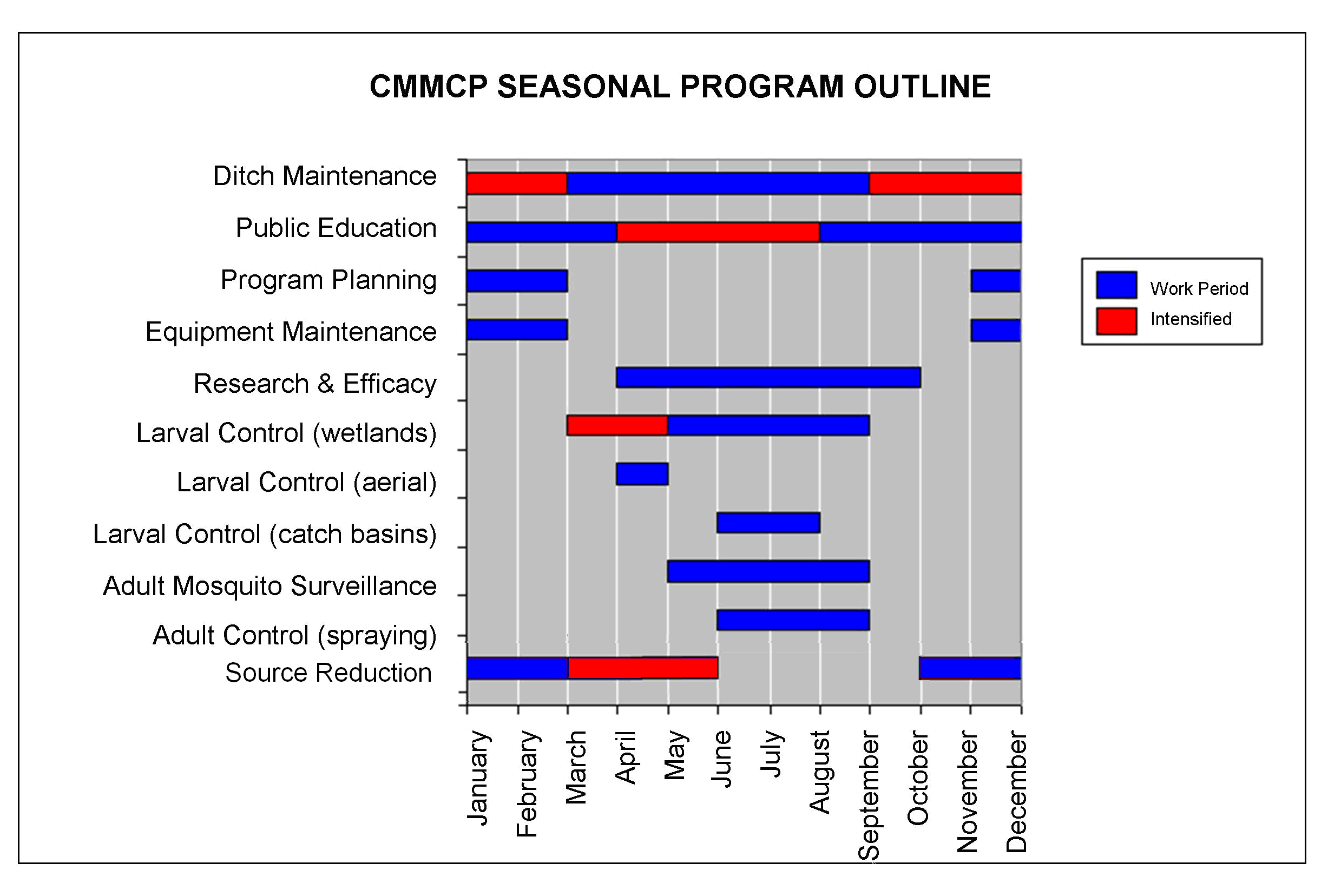
LARVICIDING: Wetlands and
suspected mosquito breeding sites are monitored from March through September
to determine the need for applications of environmentally sensitive products
(typically Bti) to control and/or eliminate the larval mosquito. By
controlling mosquitoes in their larval stage the need for adult mosquito
spraying is reduced. To view information on the products used for this
program, please check our Pesticide Information page. You may also fill out an
online Service Request form on this page. ¨ WETLAND
RESTORATION: Mosquitoes need still, stagnant water to complete
their metamorphosis from egg to adult. The Project conducts maintenance on
ditches, culverts and man-made ponds to improve water quality and increase
water flow, reducing the potential for mosquito breeding. . ¨ SURVEILLANCE: Mosquito
populations are monitored in both the larval and adult stages to determine
the appropriate control methods to be employed, prevalent mosquito species,
and disease transmission potential. CMMCP has instituted a program to
supplement the Dept. of Public Health's arbovirus surveillance program for
monitoring West Nile Virus in ¨ PUBLIC
EDUCATION: Educating the public about mosquitoes and their
biology is an important aspect of the Project's program. We offer a
comprehensive program geared towards school-aged children from Kindergarten
to High School in member communities. This program is tailored to meet the
needs of intended audience. The Project produces public relations handouts,
and all member Town Halls are stocked with information on CMMCP, our
programs, and how the homeowner can reduce mosquito populations in their own
area. Project staff is available to meet with civic organizations, town/city
boards, and to participate in Health Fairs. ¨ ADULTICIDING: When
adult mosquito populations reach intolerable levels, hand-held or truck
mounted sprayers are used to reduce the adult mosquito levels in residential
areas. The Project has worked diligently over the past 10 years to achieve
the goal of reducing the dependency on adulticiding by increasing the
emphasis on larviciding, public education and water management. To view a
copy of our current spray schedule, please click here. To view a list of
tentative spray areas for the current evening (if scheduled), please click here (these areas are also posted on the CMMCP phone
system after 3:30PM at (508) 393-3055). To view a list of spray areas done
for the previous evening, please click here. Information
on the product used for this program can be found on our Pesticide Information page. Information on the
exclusion process (to have a property excluded from spraying) can be found on
our Pesticide Exclusion page. For additional
information, please call our office at (508) 393.3055. ¨ RESEARCH AND EFFICACY: While CMMCP is an agency charged with the control
of mosquitoes, we strive to check for efficacy of our products and
techniques, and whenever possible perform research in new or different areas
of mosquito control. Check the link above for research and efficacy trial
performed by CMMCP. Please contact Field Biologist Frank Cornine at cornine@cmmcp.org if you have any
questions. ¨ GEOGRAPHIC INFORMATION SYSTEM (GIS): The addition of the GIS program at CMMCP has given
the Project a new tool for creating a more productive, efficient mosquito
control program. In time, the GIS will encompass essentially all aspects and
services of CMMCP, helping in the collaboration of various departments. |